Stories left on the cutting room floor:
Barb DeRiese Initiates a Rookie Teacher
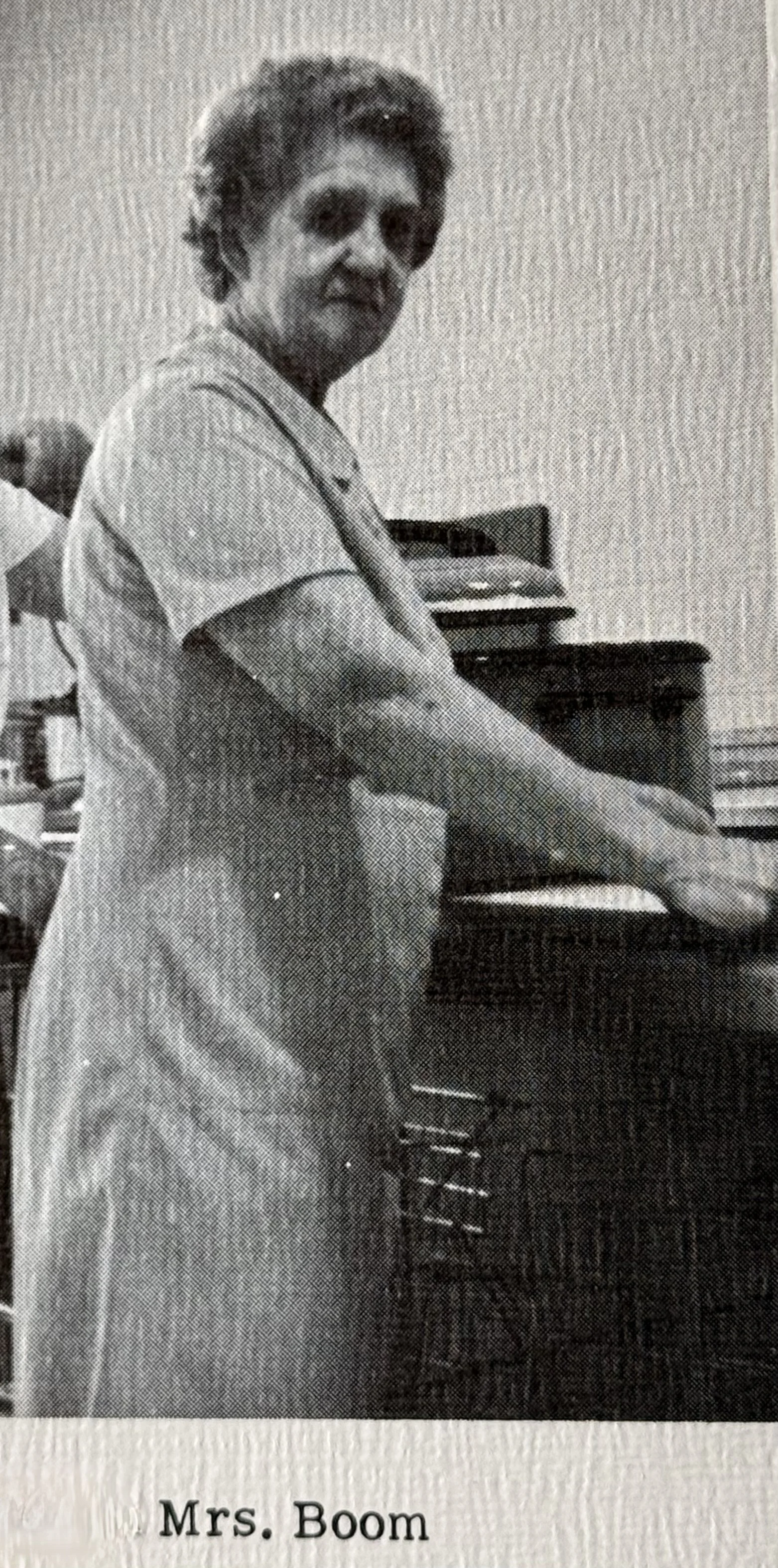
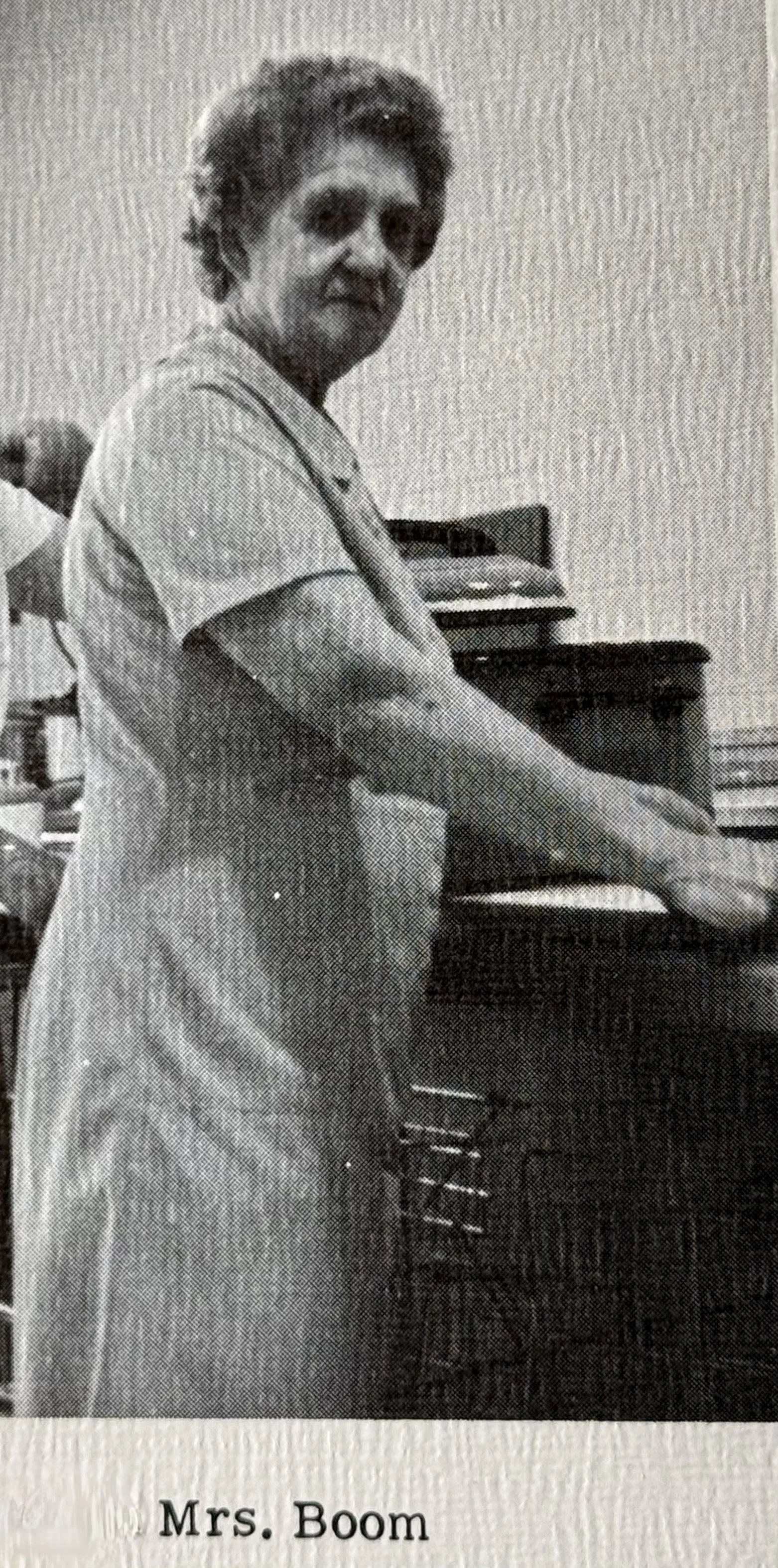
When I began teaching in Bladen, Nebraska, in the late 1960s, Nettie Boom ran the school kitchen. Mrs. Boom proved more interested in saving the district money than in tickling student taste buds. Her pedestrian cuisine relied on free USDA surplus commodities. The result, spaghetti with sauerkraut and peanut butter gravy, challenged student and teacher taste buds on a weekly basis. Mrs. Boom discouraged the extravagant waste you might expect by keeping a watchful eye for any student or teacher foolish enough to discard leftover food—the first time. Each year, hoping for an expanded menu, the school board raised Mrs. Boom’s budget. Each year, she proudly returned thousands in unspent lunch funds and expected acclaim.
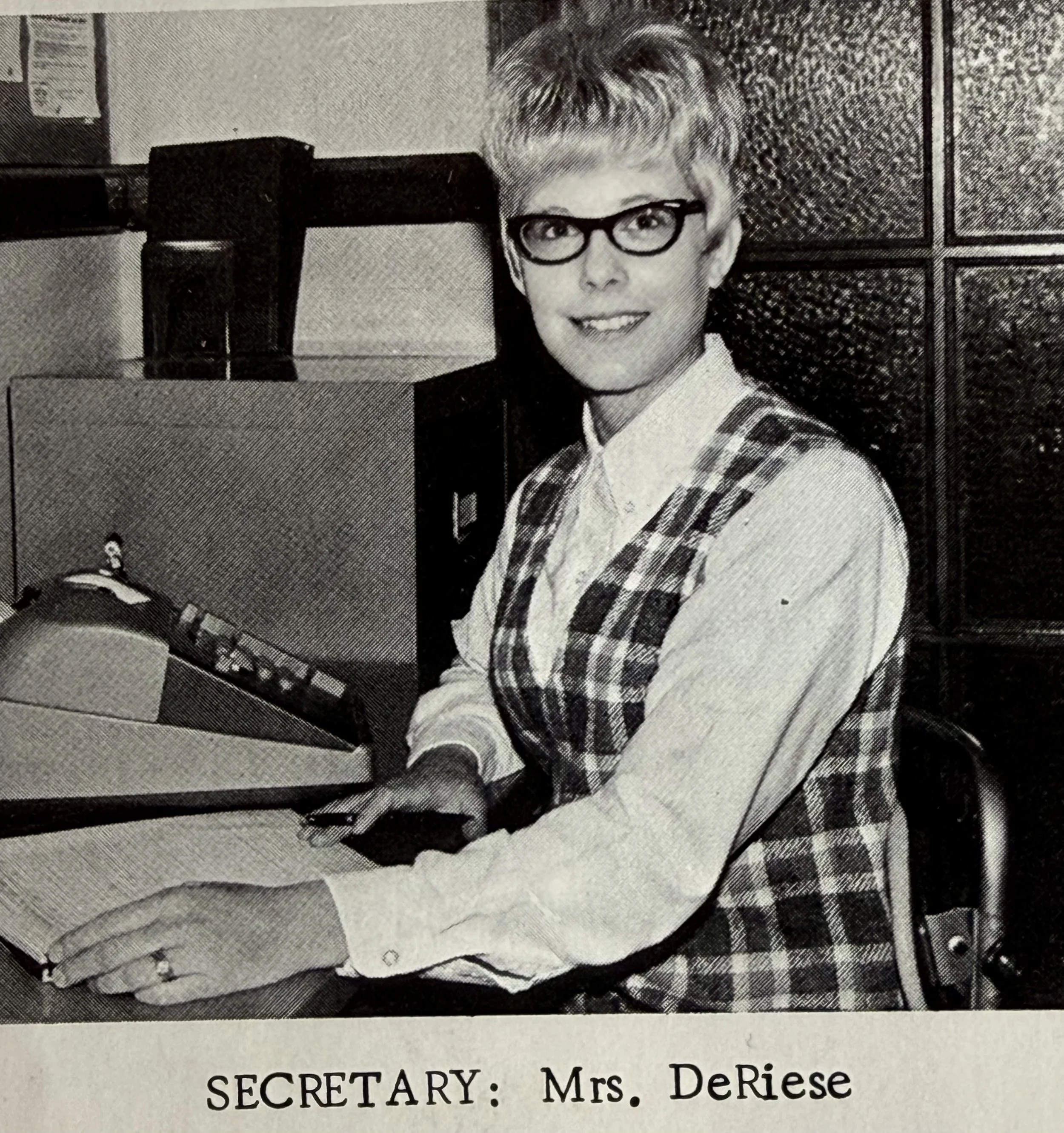
School secretary Barb DeRiese distributed the school bulletin every morning. Teachers read the day’s news to their classes, noting the time the school buses were supposed to leave for Guide Rock, informing the pep band members of the emergency practice session over the noon hour, nagging teachers about the down slips due in the office by this afternoon, no later than 4 p.m.
On this particular Friday, Barb DeRiese wore a wiseacre grin when she handed off the school bulletin. “Be sure to read the whole thing,” was all she said. Which, of course, I always did. And there, stuck between notice of pep band practice and a warning to the sophomores that class dues were tardy, was an unusual news item.
“Mrs. Boom uses her old, holey underwear to wash the school dishes.”
Given Mrs. Boom’s parsimony, I had no trouble believing this to be a true statement. But why was it any business of my students? Perhaps I should skip it? But there it was, right there in the daily bulletin like it belonged. Every teacher would be reading the same odd news item to their classes. Who was I to quibble? I forged ahead, heedless of the consequences.
“Mrs. Boom uses her old, holey underwear to wash the school dishes.”
Silence. Not a snicker. Not a suppressed belch.
The response, when it finally came? “That’s stupid. Why put that in the school bulletin? Everyone in town knows that.”
Never mind, I didn’t know it.
In fact, Barb DeRiese did not insert the Nettie Boom news item in every school bulletin, only in the copy destined for the social studies classroom. After she ran off one bulletin, she Scotch-taped over the offending passage and duplicated the other copies without the Nettie Boom bombshell. I was the only gullible she snookered.
Our school secretary could not have been more pleased with how things turned out.
Adventures in the Teaching Trade by Bryan L. Jones
Stories left on the cutting room floor:
Bob Berns documented Bladen High School sports for many years. If anyone had a question that had a statistical answer, Bob was your guy. Leading scorer on the 1958 boys basketball team? Check. Holder of the Bladen record for rushing yards in a season? Check. Highest batting average for a member of the girls’ softball team? Check. Bob’s capacious memory provided the community with a living encyclopedia of Bladen sports history.
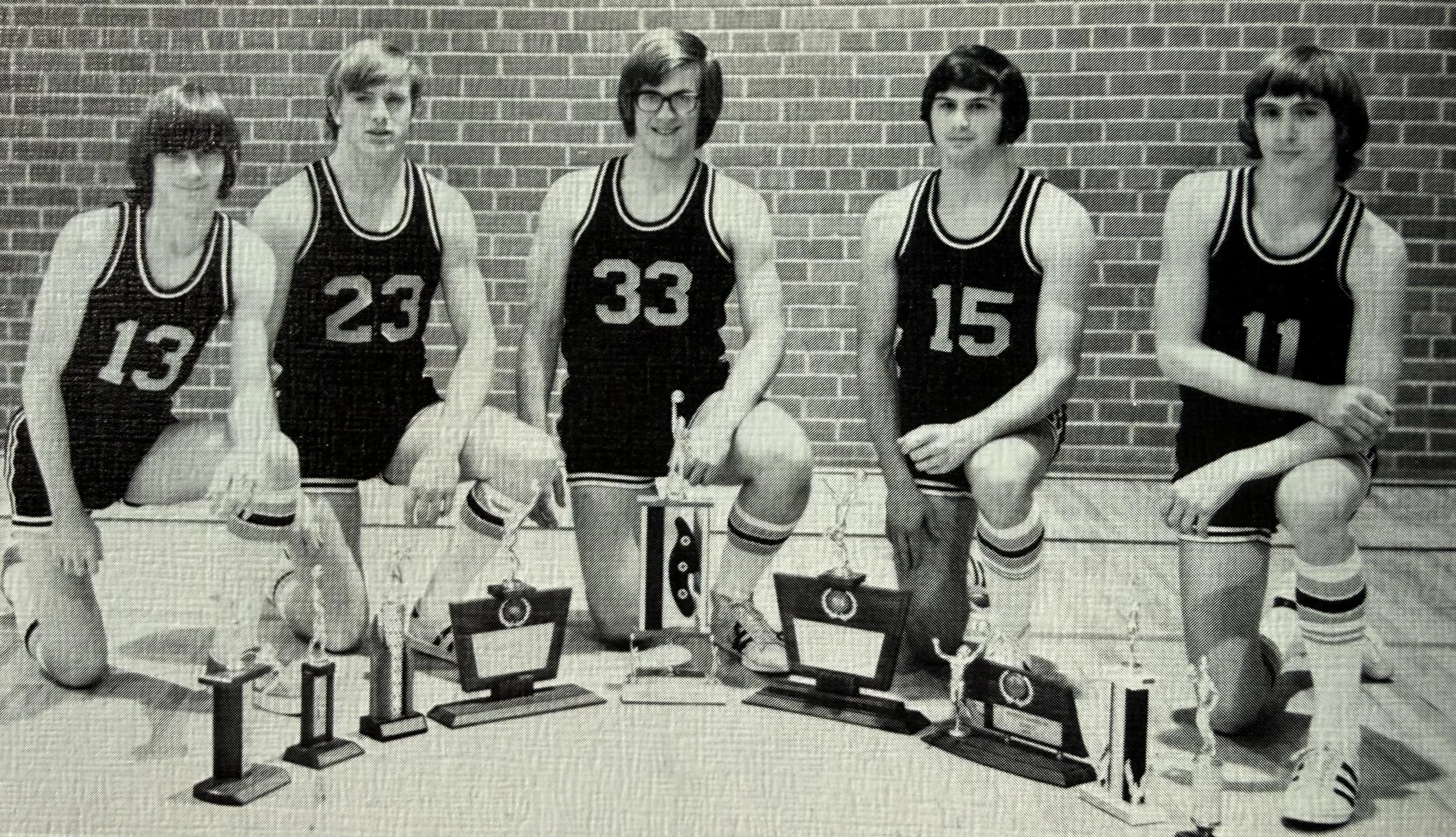
Early-season home basketball contest featuring a competitive Campbell team and the talented 1972-73 Bladen squad that fell one district game short of the state tournament, losing to Hampton, the eventual state champion.
Sitting at the score table on the gym stage:
Shop teacher/chess savant Ken Berns is operating the scoreboard. I am sitting on his right, keeping the official Bladen scorebook. Francis Skupa, brother to Antonette Turner, is on my right, in charge of the official Campbell scorebook. Francis was the heart-on-his-sleeve Campbell patriot who served as the field announcer for Campbell High School football games. If the referees assessed the Campbell team a penalty, Francis typically announced, “They SAY Campbell was guilty of holding,” or “They SAY Campbell was guilty of being offside.” He did this so often it became a running meme with Bladen sports fans. “They SAY the Campbell team doesn’t know a football from third base.”
As expected, Bladen jumped out to a comfortable lead, a lead it maintained for the rest of the game. This proved frustrating to Francis, who began blaming the referees for Campbell's lackluster performance. At times, he became so agitated he forgot to keep score and had to ask me what had happened while he was yelling at the referees.
After yet another Francis meltdown and the game’s outcome decided, Ken raised an eyebrow. I returned the raised eyebrow. During the next outburst, with the crowd’s attention focused on a loose ball scuffle, Ken added two points to Bladen’s side of the scoreboard. I recorded two points for Jerry Galloway, Bladen’s leading scorer. Francis, once he calmed down, asked who scored the two points. I was kind enough to help him out.
After the closing buzzer, the crowd filing out and a frustrated Francis Skupa headed for home. Bob Berns, clutching his personal scorebook and grinning like a raccoon, wandered over to the scorers' table. “Who did you boys credit with that imaginary basket?” I handed him the scorebook and told him to help himself. He handed it right back. “Who did you boys credit with that imaginary basket?”
We pled ignorance and bailed.
June 1, 2024
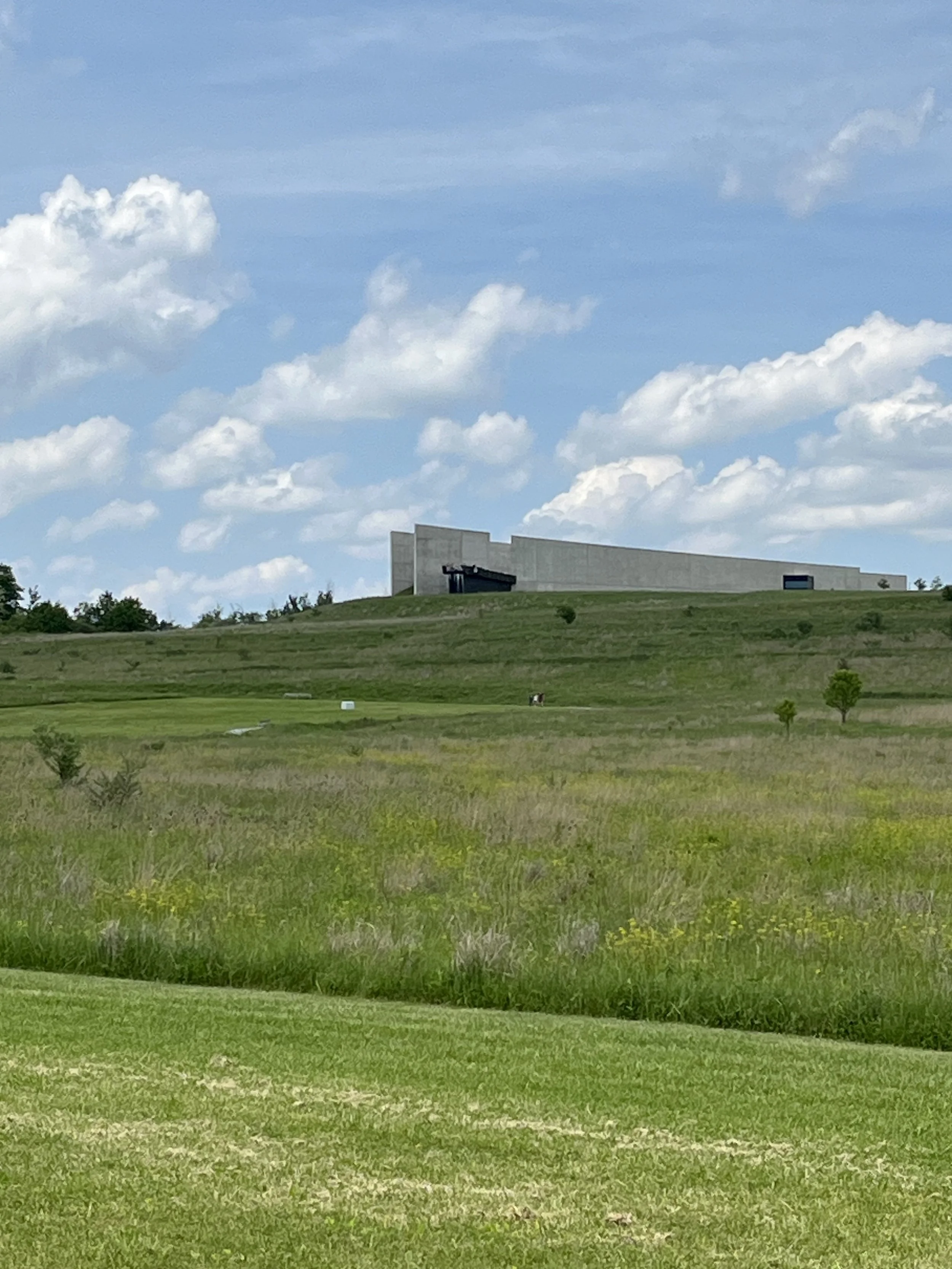
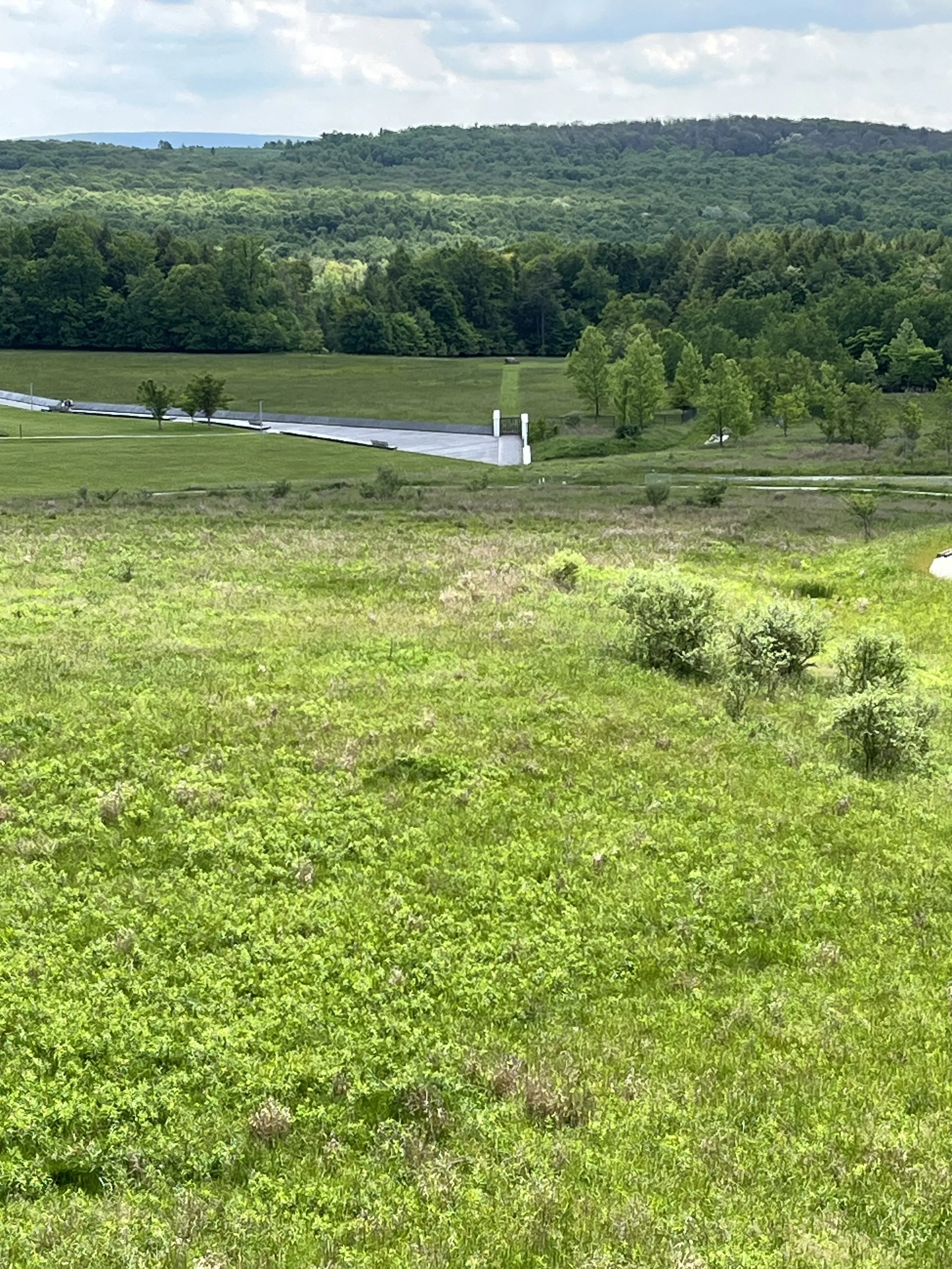
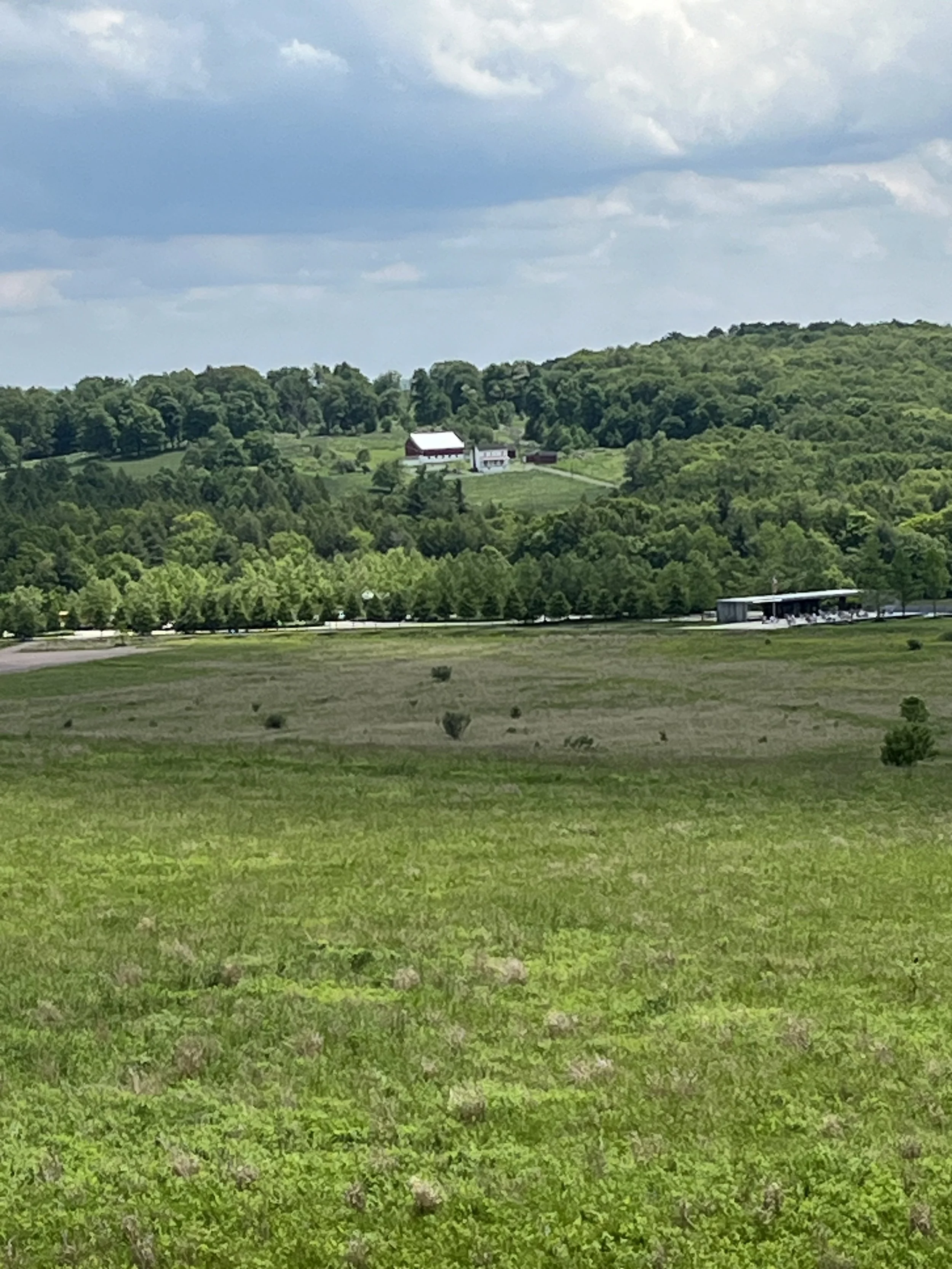
Kathy and I are not quite over our visit to the Flight 93 Memorial.
When humorist Dave Barry wrote about his experiences at Gettysburg and the Flight 93 crash site, the plans for the Flight 93 memorial were in the preliminary stages. Barry and the local coroner worried the eventual memorial would be focused on the geopolitical background before and after 9/11, not the victims and their families. (see link below)
A few minutes into a visit to the Flight 93 Memorial Park, nestled in an impossibly green, somnolent valley in the wooded hills an hour east of Pittsburgh, your thoughts will soon be consumed by the victims and their families. The murderers receive brief mention. The Stone Age religious hatred that spawned the 9/11 hijackings is, by design, not acknowledged nor reciprocated.
You may be walking along the crash site fence, trying to visualize the plane's path into the ground. And you might be wondering if the plane was upside down when it hit, as the official post-crash investigation suggests. And wondering if indeed the plane flew into the ground upside down, was it because the passengers were broaching the cockpit door or because the pilot lost control while maneuvering the plane erratically to throw off the passenger attackers? Or did the pilot have a whimsical urge to die upside down? And while you're walking and thinking you come to the wall inscribed with the names of the passengers and flight crew. The inscriptions turn your thoughts to the last minutes of the flight, the passengers huddled in the back, ordered to stand down with the threat of a mythical bomb, passengers making final phone calls to friends and family, passengers discovering the World Trade Center has been attacked, realizing Flight 93 was not going to end in peaceful negotiation with the hijackers. And realizing Flight 93 would end like the ones hitting the World Trade Center, killing everyone on board the plane and large numbers of bystanders. If you listen closely, you might determine if the passengers understood Flight 93's 42-minute delayed departure from Newark airport was the time gap allowing Fight 93 passengers to hear the news from New York and act on that news. Had the plane taken off on schedule it would most certainly have already hit the US Capitol (with both houses in session) or the White House before news of the other hijackings arrived.
Imagine yourself transported to the crowded rear seats, listening as the conversation turns from passive acquiescence to action. Devout Christian Todd Beamer, with a pregnant wife and two young sons at home, makes the first bold suggestion. Others agree. Then the last-minute personal concerns. If we don't stop this how many others will die? How will my children and spouse survive this? Did I tell them I loved them when I left the house this morning? Is my will up to date? If mom and dad learn about this on the news, who will comfort them?
Motion to act voted on and carried. Todd Beamer leads the passengers and flight attendants in reciting the Lord's Prayer and the 23rd Psalm. Then the immortal command, "Let's roll." How many joined the rush to the front? Did flight attendant Sandra Bradshaw, who'd been boiling water in the galley to throw on the terrorists, join the first rush on the cockpit? We hope she did. And because we're not as forgiving as we should be, we hope the hijackers, currently nursing their burns in a hot climate, keep begging the sketchy guy in the red Union underwear suit to turn down the thermostat.
The passengers' action was not a suicidal military operation where the participants obeyed orders despite the odds. This was a voluntary act of extraordinary self-sacrifice by ordinary civilians, the kind of folks who might live next door, the kind of folks who might occasionally get on your nerves. They acted to prevent another World Trade Center. They acted to protect people they'd never known and would never know.
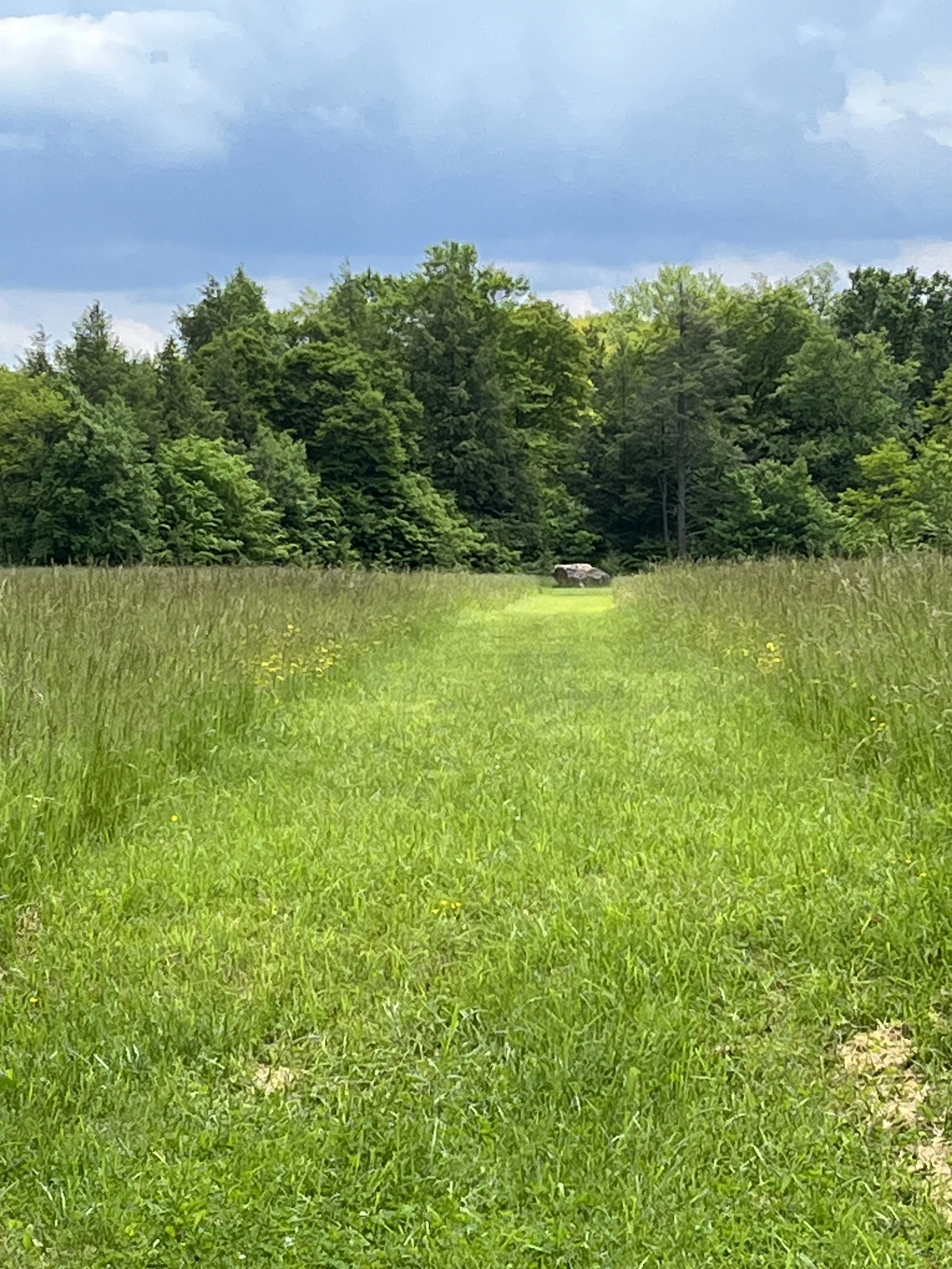
A mowed path through the waist-high grass leads to a substantial boulder marking the plane's initial impact. Beyond the boulder, stands the young rejuvenated forest twenty-three years after the huge fireball roared up the slope incinerating everything in its path. And you're thinking of a display back at the museum. Innumerable bits of debris plucked from the crash site--a small piece of plastic driver's license, a charred button, a snip of aircraft aluminum. Other bits and pieces lie unseen under the green sward hosting the crash site, the fence and the inscribed names and the large boulder. Millions of bits and pieces. Now an eternal part of this unique cemetery, incorporated into the rich brown soil of western Pennsylvania, intertwined with grass roots and tree roots and an aura of ineffable sadness.
The museum's exhibits include a wall of phones where you can hear the last words of passengers to friends or relatives or left on answering machines. A few visitors listen to all the recordings. I could only manage to get through three answering machine messages.
The first, a young, perky mother telling her husband there was some trouble on the plane, telling him she loved him and instructing him to tell the children she loved them, would see them soon and, by the way, to tell everyone she loved them.
The second, a woman who was sobbing so violently it was difficult to hear. She told her husband she loved him and, between sobs, predicted the plane and the passengers would not survive.
The third phone message from a middle-aged woman was left on a sister's phone. She was also sobbing but composed herself to tell her sister where the safe with the will and funeral instructions was located in the spare bedroom closet and provided the safe combination--twice. She also described the clothing and the location of the clothing she wanted for her casket outfit. She told her sister she loved her.
Dave Barry's piece: https://www.miamiherald.com/living/liv-columns-blogs/dave-barry/article1938637.html
November 18, 2018
A few weeks ago my maternal uncle, Milton Tupper, passed away. He was a major figure in my life and patiently shared his deep knowledge of family history and livestock and his unique business practices. In reconsidering Milton’s life and the obstacles he overcame, I couldn’t help but remember his father, my grandfather Bryan Jay Tupper, who was a force of nature, both mentally and physically. Clover, A Literary Rag (Bellingham, WA) recently published That Angry Old Man, a poem I wrote after Bryan Tupper died.
THAT ANGRY OLD MAN
Eyes fiery under age-roaned brows
kicked stiff-kneed at the piled white sheet
like his saddled sorrel mare
forgotten in the excitement
fighting thirsty heel flies in the dusty barn
That angry old man yelled
yelled right on past a rigid wife
waiting silently in her second-best dress
yelled at them, the nurses, the doctors
yelled at the ponderous mud-slugged irrigation pipe
that rode him down in the July sun
yelled at all the dim-witted laggards
who hadn’t known, hadn’t been there
hadn’t anticipated his new need for help
yelled for a pill, a magic pill
a pill for the pain in his rigid chest
a pill he’d paid for several times
a pill no rule-bound nurse would give him
for pity nor love nor money
And when no one would stick
a deaf head in his roaring room
he turned his purpled face
on the quailing bystander
gripped the soft white hand
with calluses born barring post holes
into an alkali-baked Wyoming homestead
Tell the boys not to sell the wheat
he urged, eyes searching for obedience
Tell them to get more water over west
if they’re man enough to carry pipe
Tell them that bull up north has the pink eye
he’s got it bad, he needs treating, he won’t wait
That angry old man let his head sink
against the stark, germ-free pillow
feet kicking stiff-kneed against the rumpled sheet
grumbled past a rigid wife, twisting
a damp embroidered handkerchief,
to an empty afternoon hallway
whispered at the long-suffering fools
who always failed to do his bidding
as the soft hand slipped from under his weakening calluses,
fled silently toward the fresh outside air,
new commands filling the space behind
as the old ones fell wasted
on the gleaming floor
Bonus Chapter: North of the Platte, South of the Niobrara
FINE LINES, (Omaha, NE) published Killing Time in Valentine in the Winter, 2018 issue.
Quisque iaculis facilisis lacinia. Mauris euismod pellentesque tellus sit amet mollis.